Front page | About us | Contact us | Sitemap | RSS | Hungarian website   

Archive for the ‘Eco-valley Program’ Category

Film about Eco-valley

Film about Eco-valley

filmLook at the 3 minutes promo of our Eco-valley film

on Youtube:

http://www.youtube.com/watch?v=WXvbrv50uCE

Short questions – short answers about Krisna-valley

1.              Name, location and size of your community?
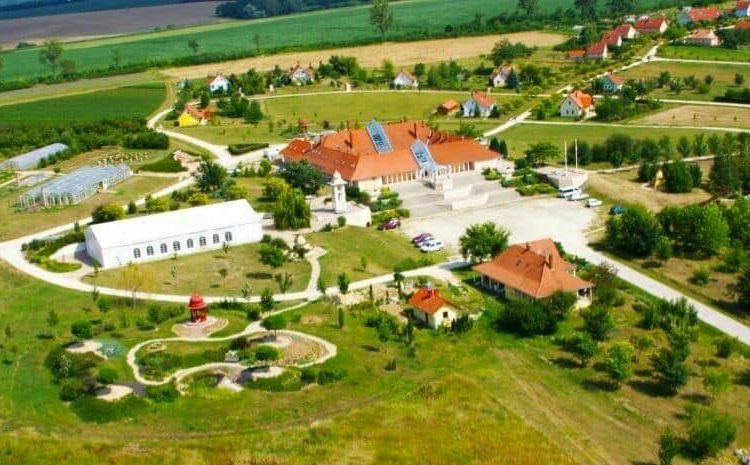
Krishna-valley
Somogyvámos, Hungary
235 hectare, 133 people Read the rest of this entry »

Models for management of environmental crisis

dsc_6339Even city dwellers have several choices to participate in reduction of climate crisis. Many tiny “green” changing remarkably contribute in relief of approaching crisis. However those who take their roll seriously, try to get out from consumer madness. Gradual reduction of demands rather improves towards inner harmony, then series of getting newer and newer goods. Read the rest of this entry »

Our Foundation became a participant in the Hungarian – Indian intergovernmental cooperation

kezfogas11Among several research institutes and many universities The Eco-valley Foundation is a Hungarian cooperative partner as well. India and Hungary prepared a work schedule for 2009 and 2010 and they signed an agreement on ministerial level on 15. October 2008. Read the rest of this entry »

Self-sufficient farm communities – a real answer to global crisis

Issues in connection with climate change has become an everyday topic in media. While some years ago even greater mess of the leader scientists did not want to openly side in this question, now more and more studies come to light what declares that global climate crisis is not a question but a fact. These studies urge international steps and cooperation. Read the rest of this entry »

React to the need for change by changing yourself

The Eco-valley project provides a special opportunity for us to show tangible results in solving the pressing national problems brought about by the climate changes.
This project fits well into the regional ecological policy of the Southern Transdanubian Region, which is very education-centered. The project is also completely in harmony with the aims of the New Hungary Development Plan (Új Magyarország Fejlesztési Terv). We already have the necessary bases to build on, the project is well prepared, it has clearly visible and measurable targets, it is cost effective and it is well maintainable on a long term after its realization. It will be maintained well because:
it contributes considerably to the protection of the environment using renewable energies and organic farming.

  • it provides a relevant local action plan to face the global challenges of climate change.
  • it provides well organized education for both young and adult audiences to promote the diffusion of the ideas of organic farming and organic living.
  • it creates new jobs and enhances social integration.
  • besides all the above points, this project is a model project, and a unique eco-touristic target on a European scale.

Information campaign

The Eco-valley project not only undertakes the providing of theoretical and practical education for people who come here (whose numbers can reach 50 000 yearly) but it also aims at informing and educating the wider masses of people in the whole society about these environmental issues.
This has a prominent importance for a sustainable society and economy as it is indispensable to change life-styles, views and habits if we really want to see results on a national scale. This need is addressed by the communication department of the Eco-valley.

Eco-household

This eco-household is a venue for training people in the practical aspects of sustainable living. Besides conveying environmentally conscious values it also aims at instructing people: how each and every one can do something for improving the conditions of their surroundings instead of destroying it. This is of utmost importance as there are already many theoretical systems for tackling environmental problems, but as long as these are not present in our lives they will remain nothing more but Utopian ideas.

Our developments in this field:

  • an open yard, where everyone can take part in the activities of a natural life (various programs for different target-groups)
  • practical training sessions, the first steps of a paradigm-change
  • organic farming and self-sustainability
  • practicing and teaching traditional craftsmanship
  • accessory facilities

Training and research center

Environmentally conscious life-style

We would like to present Eco-valley’s activities to the people effectively, targeting as wide an audience as possible. The Environmentally conscious life-style – training and research center is a building with an area of almost 1000 square meters, which represents environmental consciousness both in its appearance and in its maintenance. This training center, which provides theoretical as well as practical training, along with its natural environment, its botanic garden and the various facilities all aim to demonstrate and propagate a sustainable life-style.

Or main developments:

  • an ecological and life-style training center, attracting 50 000 visitors annually (in the heart of an 11 hectare botanic garden)
  • a center for using renewable energies (self-sufficient buildings)
  • a local waste-management model project
  • research possibilities, conferences and training seminars
  • themed walks around presentations
  • local answers for the effects of global climate change, experimental solutions
Contact us!
Név
Email
Privacy statement
Search
Gallery
Loading...
image IMG_7862.JPG image IMG_7960.JPG image IMG_8245.JPG image IMG_7820.JPG image DSCN6422.JPG image FNYN_2010apr17_3_k.jpg image FNYN_2010apr3_3_k.jpg image DSCN6418.JPG image Magfejto_2010apr16_2_k.jpg image DSCN6465.JPG image Magfejto_2010apr16_k.jpg image DSCN6436.JPG
Number of participants in our programs: 1,500 persons.
There are currently 30 students preparing and 9 students defending their theses.
Site last updated: 2012-05-19


The 2010 Sustainability Conference financed by the European Union, the European Regional Development Fund co-financed.